
In an interview with the MINA Agency, Ponomarevna said that Montenegro stands out as the most advanced candidate, emphasizing that the credibility of the EU enlargement process is built when success in reforms is truly rewarded with progress in negotiations.
She recalled that Slovakia is among the long-standing and dedicated advocates of enlargement to the Western Balkan countries.

"EU enlargement represents an investment in the stability and security of Europe. At the same time, it encourages reforms in candidate countries," said Ponomarevna.
According to her, Slovakia believes that the Western Balkan countries are naturally close to the European space, and among them, Montenegro stands out as the most advanced candidate.
"At the same time, Slovakia consistently emphasizes that the process must be fair, predictable and based on the same rules for all candidates. We oppose 'double standards' and different approaches towards individual candidates," Ponomarev said.
She recalled that this was recently reiterated by Slovak Prime Minister Robert Fico, who, at the Western Balkans summit in Brussels in December last year, expressed opposition to unequal treatment.
"The credibility of the enlargement process is built precisely when success in reforms is truly "rewarded" by progress in negotiations," Ponomarevna emphasized.
Asked whether she believes Montenegro's goal of becoming a member by 2028 is realistic, Ponomarev said that the goal is ambitious, but achievable if the pace of reforms in the country is maintained.
According to her, the closing of five more chapters in December can be considered a positive signal of concrete progress, while this year will be crucial to show that results can be achieved when there is sufficient political will.

"Twisted" got a trailer
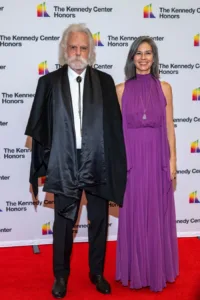
Bob Weir, guitarist and lead singer of the Grateful Dead

Marvel has released a teaser for the New Avengers, and Thor is back.
"In this context, I would like to highlight the effective cooperation across the entire political spectrum, as well as the efforts the Government is making in the integration process," said Ponomarevna.
Speaking about the EU's readiness for enlargement, she said that it is increasingly clear that enlargement has a geopolitical and security dimension.
"At the same time, the EU must improve its own readiness - capacities, decision-making and internal reforms. Both processes must take place in parallel: reforms in the candidate country and readiness within the Union, so that the outcome is sustainable and credible," said Ponomarevna.
When asked what she sees as the key challenges in Montenegro's European integration process, Ponomarevna replied that they continue to be reflected in the credible implementation of the rule of law and achieving tangible results in the fight against corruption and organized crime.
"This means strengthening the capacity and stability of key security and judicial institutions, increasing the integrity of the system, and ensuring that reforms translate into visible results, such as more efficient investigations, quality judicial decisions, and increased public trust," Ponomarev said.
In parallel, as she pointed out, practical tasks of internal security are also recurring: more efficient fight against money laundering, stronger border management, modern information systems and further harmonization with EU policies where necessary.
"Consistent implementation of reforms is crucial at this stage, which means sustaining them over time and delivering concrete results," Ponomarev said.
She believes that the European perspective remains the best framework for maintaining stability and good relations in the Western Balkans.
According to her, stability based on reforms, strong regional cooperation, and the ability to resolve sensitive issues in a way that reduces tensions are essential.
"The European perspective remains the strongest framework that provides direction, motivates reforms and supports practical cooperation. It is important that this process remains credible and fair," Ponomarevna stressed.
Slovakia interested in re-establishing air service between Podgorica and Bratislava
Speaking about relations between Montenegro and Slovakia, Ponomarevna assessed that they are friendly, stable and without open issues, but she also pointed out the fact that investment and economic cooperation lag behind political cooperation in the long term.
"Our cooperation has been based on very positive foundations from the very beginning, since the "rebirth of Montenegro" in 2006," said Ponomarevna, adding that Slovakia has supported Montenegro in its transatlantic efforts and continues to support it in its European aspirations.
Ponomarenkova sees the best opportunity, but also a challenge, for further strengthening bilateral relations between the two countries in the possibility of translating strong political relations into tangible results, especially in the field of economy.
"There is significant room for economic and investment cooperation, which has lagged behind political cooperation in the long term," said Ponomarevna, noting that Slovakia would like to see more interaction between the business communities of the two countries.
She added that supporting joint projects and identifying sectors in which the two countries complement each other is the right way forward.
"Prospective areas of cooperation are energy, transport infrastructure, tourism and smart cities," said Ponomarevna.
She believes that in Slovakia there are many companies with an innovative approach that offer modern solutions to various problems.
"Bilateral cooperation in professional, scientific, and local government areas has also been gaining new momentum recently," said Ponomarevna.
According to her, a very concrete driver for improving relations is better connectivity.
"As I have emphasized many times before and I can confidently repeat, Slovakia is very interested in re-establishing a direct flight between Podgorica and Bratislava," said Ponomarevna.
This, she added, would facilitate business contacts, tourism development and people-to-people contacts.
Ponomarenkova also emphasized that Slovakia is interested in strengthening regional cooperation, pointing in particular to the activities of the International Visegrad Fund, which operates based on the efforts of the four member states of the Visegrad Group - the Czech Republic, Hungary, Poland and Slovakia.
Recalling that the goal of the Visegrad Fund is to strengthen regional cooperation and assist countries on their path to the EU, especially within the Western Balkans program, Ponomarevna stated that it builds long-term partnerships between institutions and experts and implements practical projects that support the modernization of the region.
This, she emphasized, is beneficial for the EU accession process on both sides.
Slovakia for achieving peace in Ukraine exclusively through diplomatic means
When asked about the war in Ukraine and the EU's role in preserving peace and security, Ponomarevna reminded that Slovakia supports the achievement of a just and lasting peace, primarily through political and diplomatic means.
"The Slovak government also emphasizes that, in its view, the conflict has no military solution, which is why Slovakia is not sending weapons and rejects further financing of Ukraine's military needs from state funds," Ponomarevna stated.
However, as she recalled, Slovakia has been helping and continues to help Ukraine, primarily in the civilian and humanitarian fields.
Ponomarevna explained that Slovakia supports those affected by the war through recovery projects, energy assistance, and practical initiatives, including support for demining.
"The EU's role is essential and is based on preserving European security, strengthening resilience, and at the same time creating space for peaceful solutions and long-term stability in Europe," concluded Ponomarevna.