
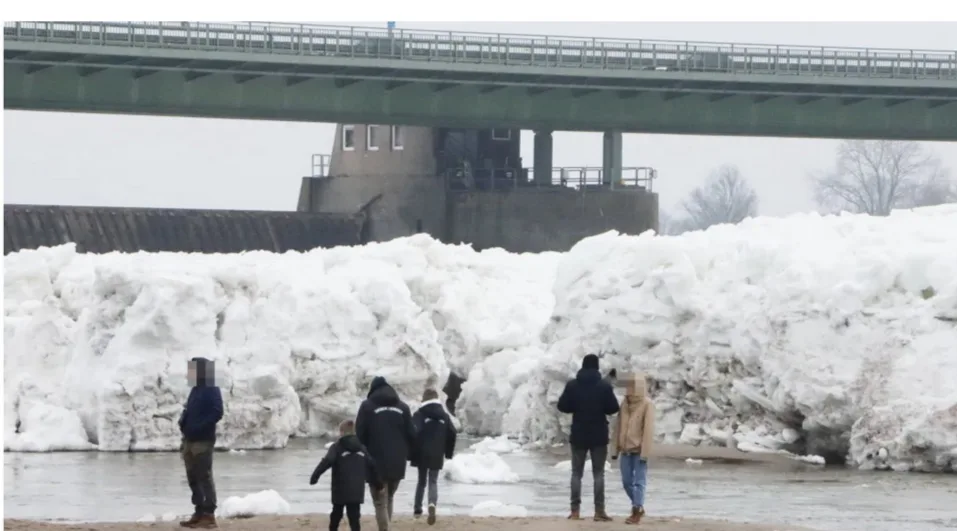
Ledene mase nagomilale su se kod ostrva Elba, ispod mosta u Geštahtu, gde je šest ledolomaca neprekidno angažovano kako bi rijeka ostala prohodna, prenosi Bild.
Prema navodima Uprave za vodne puteve i brodarstvo (WSA), riječ je o neuobičajenoj pojavi, prenosi Tanjug.

“Nikada ranije nismo vidjeli nešto slično. Led se na pojedinim mjestima uzdiže i do 10 metara od dna rijeke“, izjavio je Andreas Šulc, šef flote specijalnih plovila WSA.
Stručnjaci navode da je ekstremno niska temperatura, koja je prošle sedmice dostizala i minus 10,8 stepeni Celzijusa, u kombinaciji sa izuzetno niskim vodostajem Elbe, dovele do formiranja takozvanog prizemnog leda.
Protok rijeke je povremeno iznosio svega oko 300 kubnih metara u sekundi, što, prema Šulcu, nije bilo dovoljno da se led prirodno razbije i otopi.


Kada je početkom nedjelje došlo do blagog porasta temperature, ledolomci su započeli intenzivne operacije, ali su guste ledene barijere otežale uklanjanje leda.
Među angažovanim plovilima je i snažni ledolomac “Kajler”, koji sa oko 1.100 konjskih snaga radi danonoćno na razbijanju leda.
Neobičan prizor privukao je brojne građane na obale Elbe, a usporavanje saobraćaja zabilježeno je na pojedinim deonicama zbog znatiželjnih.

Film “Twisted” dobio trejler

Preminuo Bob Vir, gitarista i pjevač kultnog benda Grateful Dead

Marvel je objavio tizer za nove Avendžerse, Tor se vraća
Meteorolozi upozoravaju da bi novi talas mraza mogao da pogorša situaciju tokom narednih dana, uz mogućnost ponovnog pada temperature ispod minus 10 stepeni do kraja mjeseca.
Ледене масе су се нагомилале близу острва Елба, испод моста у Гестахту, где је шест ледоломаца стално ангажовано како би река била пловидна, јавља Билд.
Према подацима Управе за водне путеве и бродарство (WSA), ово је неуобичајена појава, јавља Танјуг.
„Никада раније нисмо видели ништа слично. Лед се на неким местима диже и до 10 метара од дна реке“, рекао је Андреас Шулц, шеф флоте специјалних пловила WSA.
Стручњаци кажу да су изузетно ниске температуре, које су прошле недеље достигле минус 10,8 степени Целзијуса, у комбинацији са изузетно ниским водостајем Елбе, довеле до формирања такозваног приземног леда.
Проток реке је повремено био само око 300 кубних метара у секунди, што, према Шулцу, није било довољно да се лед природно разбије и отопи.
Када су температуре благо порасле у недељу рано, ледоломци су започели интензивне операције, али су дебеле ледене баријере отежавале уклањање леда.
Међу укљученим бродовима је и моћни ледоломац „Kyler“, који са око 1.100 коњских снага ради дању и ноћу разбијајући лед.
Необичан призор привукао је бројне грађане на обале Лабе, а саобраћај је на неким деоницама био успорен због радозналаца.
Метеоролози упозоравају да би нови талас мраза могао погоршати ситуацију у наредним данима, са могућношћу да температуре поново падну испод минус 10 степени до краја месеца.
Ice masses have accumulated near the island of Elba, under the bridge in Geesthacht, where six icebreakers are constantly engaged to keep the river navigable, Bild reports.
According to the Waterways and Shipping Authority (WSA), this is an unusual occurrence, reports Tanjug.
‘We’ve never seen anything like this before. The ice is rising up to 10 meters from the river bottom in some places,’ said Andreas Schulz, head of the WSA’s fleet of special vessels.
Experts say that extremely low temperatures, which reached minus 10.8 degrees Celsius last week, combined with the extremely low water level of the Elbe, led to the formation of so-called ground ice.
The river flow was occasionally only about 300 cubic meters per second, which, according to Šulc, was not enough for the ice to break up and melt naturally.
When temperatures rose slightly early Sunday, icebreakers began intensive operations, but thick ice barriers made ice removal difficult.
Among the vessels involved is the powerful icebreaker ‘Kyler’, which with around 1,100 horsepower works day and night to break ice.
The unusual sight attracted numerous citizens to the banks of the Elbe, and traffic was slowed down on some sections due to the curious.
Meteorologists are warning that a new wave of frost could worsen the situation over the coming days, with the possibility of temperatures dropping below minus 10 degrees again by the end of the month.
Ice masses have accumulated near the island of Elba, under the bridge in Geesthacht, where six icebreakers are constantly engaged to keep the river navigable, Bild reports.
According to data from the Waterways and Shipping Authority (WSA), this is an unusual occurrence, Tanjug reports.
‘We’ve never seen anything like this before. The ice is rising up to 10 meters from the river bottom in some places,’ said Andreas Schulz, head of the WSA’s fleet of special vessels.
Experts say that extremely low temperatures, which reached minus 10.8 degrees Celsius last week, combined with the extremely low water level of the Elbe, have led to the formation of so-called ground ice.
The river’s flow was only about 300 cubic meters per second at times, which, according to Schulz, was not enough to naturally break up and melt the ice.
When temperatures rose slightly early Sunday, icebreakers began intensive operations, but thick ice barriers made it difficult to remove the ice.
Among the ships involved is the powerful icebreaker ‘Kyler’, which with about 1,100 horsepower works day and night, breaking ice.
The unusual sight attracted numerous citizens to the banks of the Elbe, and traffic was slowed down on some sections due to the curious.
Meteorologists warn that a new wave of frost could worsen the situation in the coming days, with temperatures likely to drop below minus 10 degrees Celsius again by the end of the month.